A story in symbols
A coat of arms is, at its heart, a way of telling a story without words. Mine brings together family, place, heritage and the connections between the different parts of my life. And my dog.
When I was granted armorial bearings (commonly referred to as a 'coat of arms') in 2016, I did not want simply to create a collection of symbols. I wanted something that reflected the things that had shaped me: family, place, education, technology, public service and, above all, the values that I hoped would guide the way I lived and worked. The process is lengthy and fascinating.
My armorial bearings were designed by William Hunt TD, then Windsor Herald of Arms in Ordinary. After several conversations at the College of Arms in London, and several iterations, we ended up with a design which brought together connections that had emerged over time.
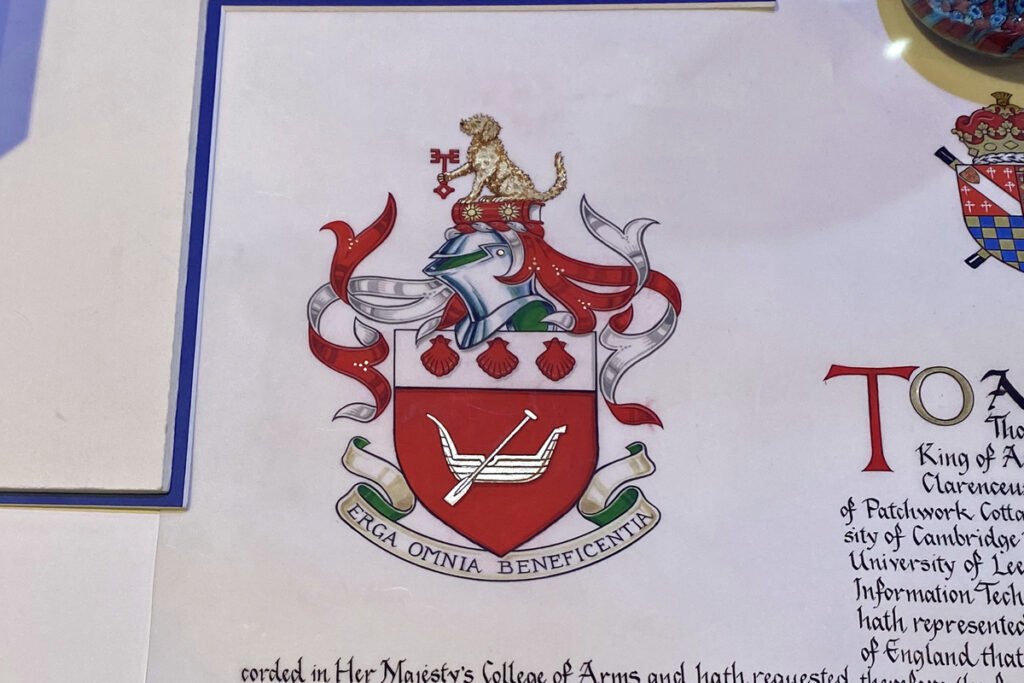
The tinctures
There is a heraldic term - tincture - which most non-Heralds would call a colour. In heraldry, though, there is a difference between colours, metals and stains. So, for heraldic accuracy, this section is called 'the tinctures' not 'the colours'. It's all rather complicated (for instance, what you or I would call 'white' is actually silver and blazoned as - meaning ‘written down in words as’ - argent). If you're at all interested in finding out more, the Heraldry Society is the place for you.
I'll continue using non-heraldic language, if I may: the colours at the top of the shield are red and white: the colours of the English (St George’s) and Polish flags.
They reflect the two parts of my heritage and the two countries (and parents) that have shaped my family story.
The shells
The three scallop shells connect my birthplace with a much older story.
I was born in Reading, and the scallop shells featured on the arms of Reading Abbey from 1121. They also appear on the current arms of the University of Reading, whose foundation was supported by George Palmer of Huntley & Palmers biscuits with a £200,000 endowment fund, worth over £12 million today.
My grandfather, Frederick Palmer (no relation), worked at Huntley & Palmers. His marriage certificate from 1932 records his occupation as 'Dough Mixer'.
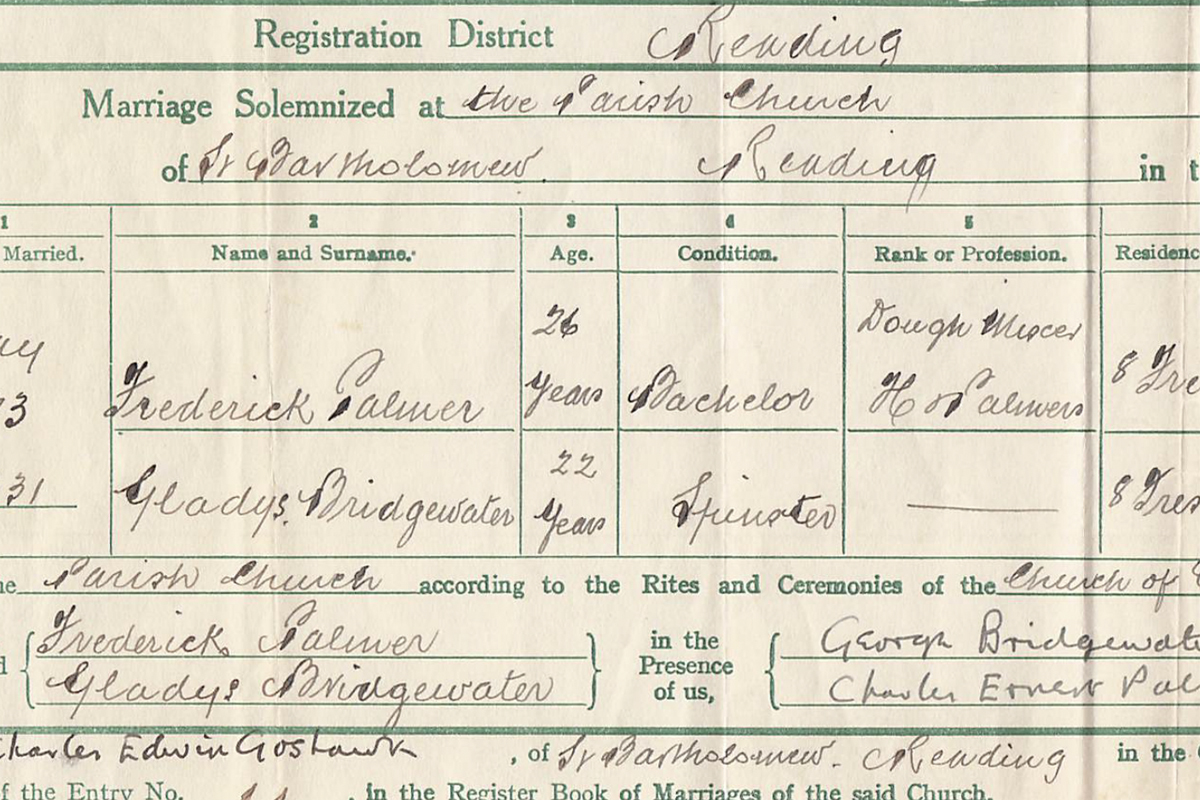
My grandfather's marriage certificate from 23 May 1931, listing his occupation as 'Dough Mixer' at Huntley & Palmers.
After he retired from Huntley & Palmers some 40 years later, he became a porter at the University of Reading in the Faculty of Letters (now the Edith Morley Building) throughout the 1970s. I remember playing on the University campus as a child, and particularly recall what seemed like an enormous shield on 'Fred's building'.
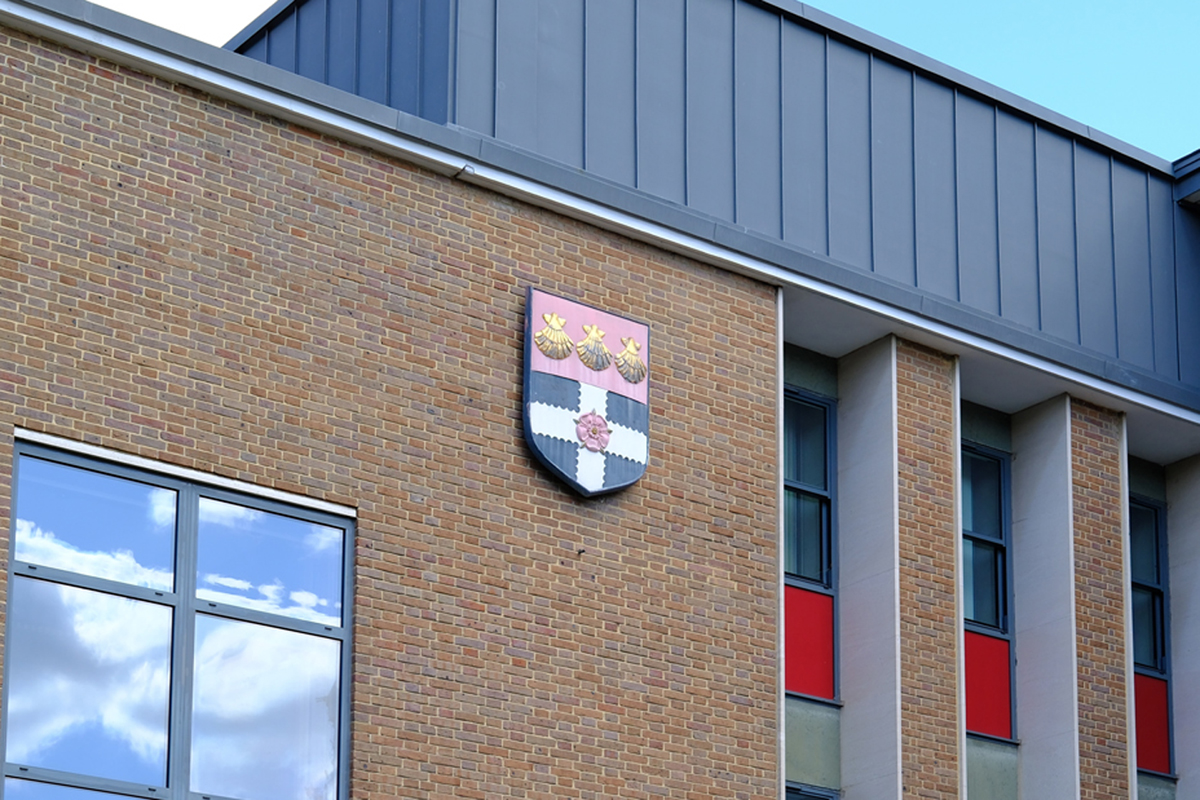
The Edith Morley Building at the University of Reading (formerly the Faculty of Letters) with the university arms.
In my childhood, I carefully honed my remarkable bike-riding and footballing skills in Palmer Park, also given to the people of Reading by George Palmer, and conveniently close to the family home.
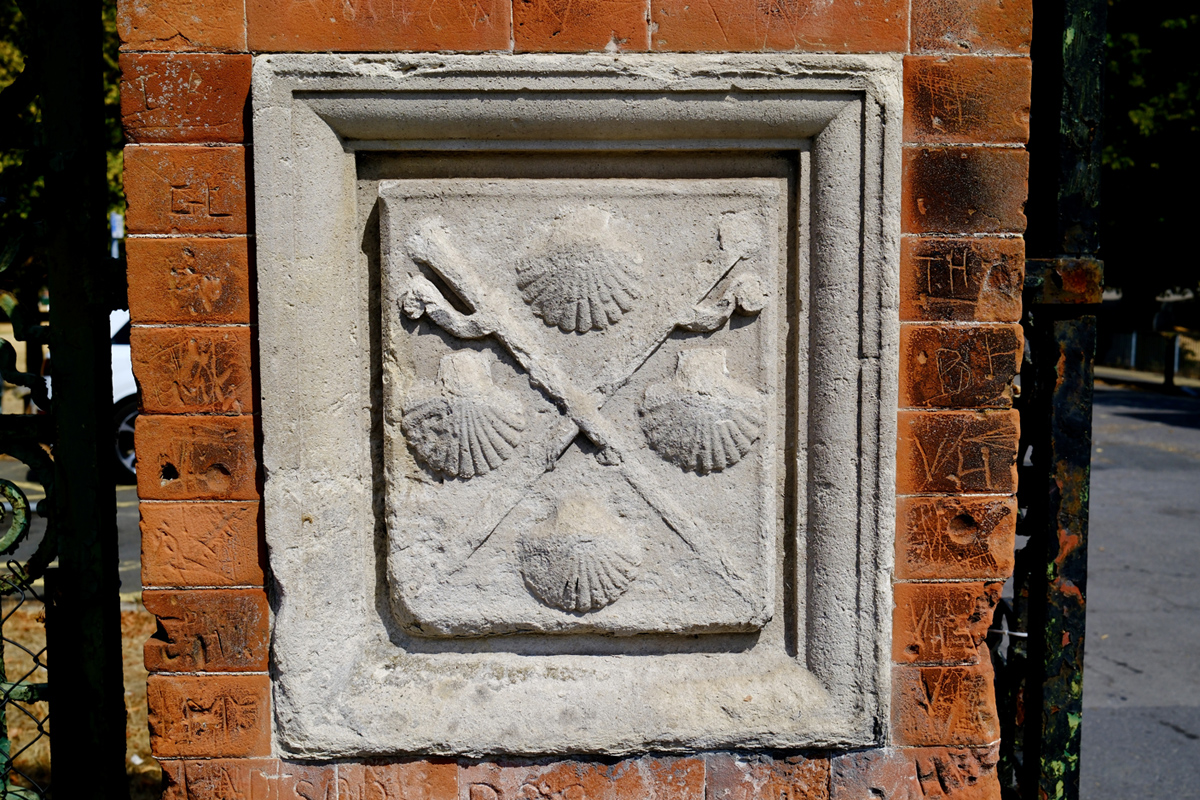
Scallop shells at the entrance to Palmer Park, Reading. They are shown with crossed staves, also symbols of pilgrimage.
The surname Palmer carries its own connection with pilgrimage. A 'palmer' was traditionally a pilgrim returning from the Holy Land carrying a palm branch, and the name later became associated with the scallop shell, the traditional emblem of pilgrims travelling to Santiago de Compostela. And, as of November 2025, there is a carved granite milestone, called a mouteira, located near the Abbey Ruins in Reading to mark the official starting point of the St James’ Way - one of the network of routes leading to Santiago de Compostela.
The scallops therefore connect not only to Reading and family history, but also to a much older tradition of journeys, learning and discovery.
The boat
My late father was born and grew up in Łódź, in central Poland.
The city’s coat of arms features a golden boat, a classic example of canting arms: a heraldic tradition where a visual symbol creates a direct connection with a name. The Polish word łódź translates literally as 'boat'.
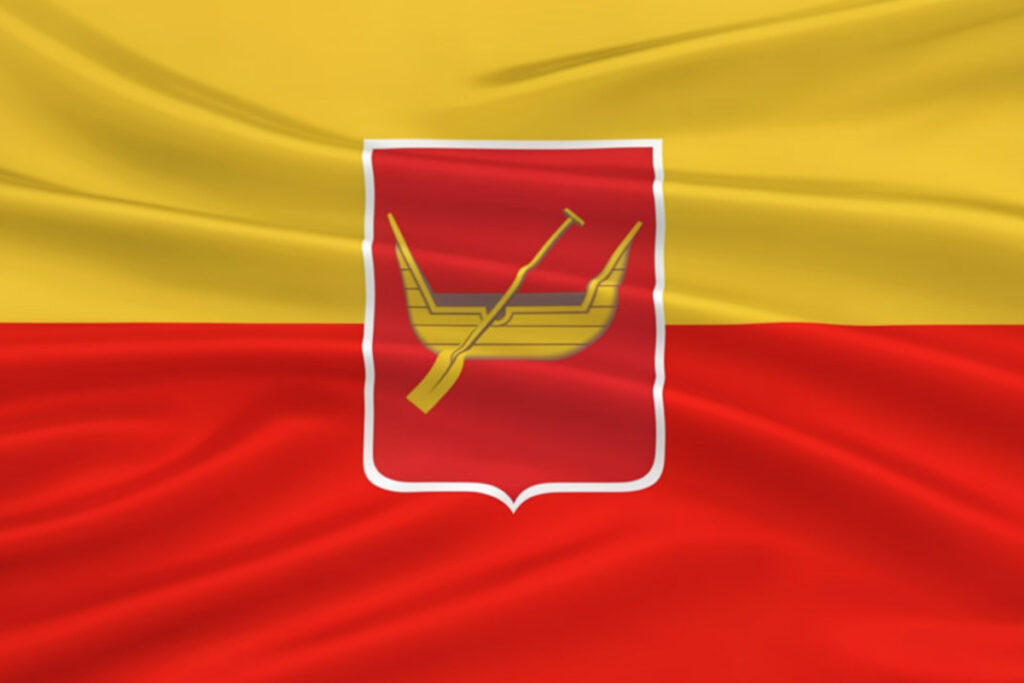
The flag of the city of Łódź.
According to local folklore, this choice comes from the legend of a man named Janusz, who was travelling down a small local stream when his wooden boat became stuck. Deciding to settle in the clearing, he overturned his boat to use as a makeshift shelter, and this became part of the story of the origins of what would eventually become Poland’s third-largest city. It’s landlocked, incidentally.
The boat in my arms connects to my father and to my Polish heritage.
The book
The helm is surmounted by a book with two suns on the spine, symbolising education and enlightenment.
The book reflects my academic and publishing work, including the textbooks I have co-authored. The two suns represent the two authors.
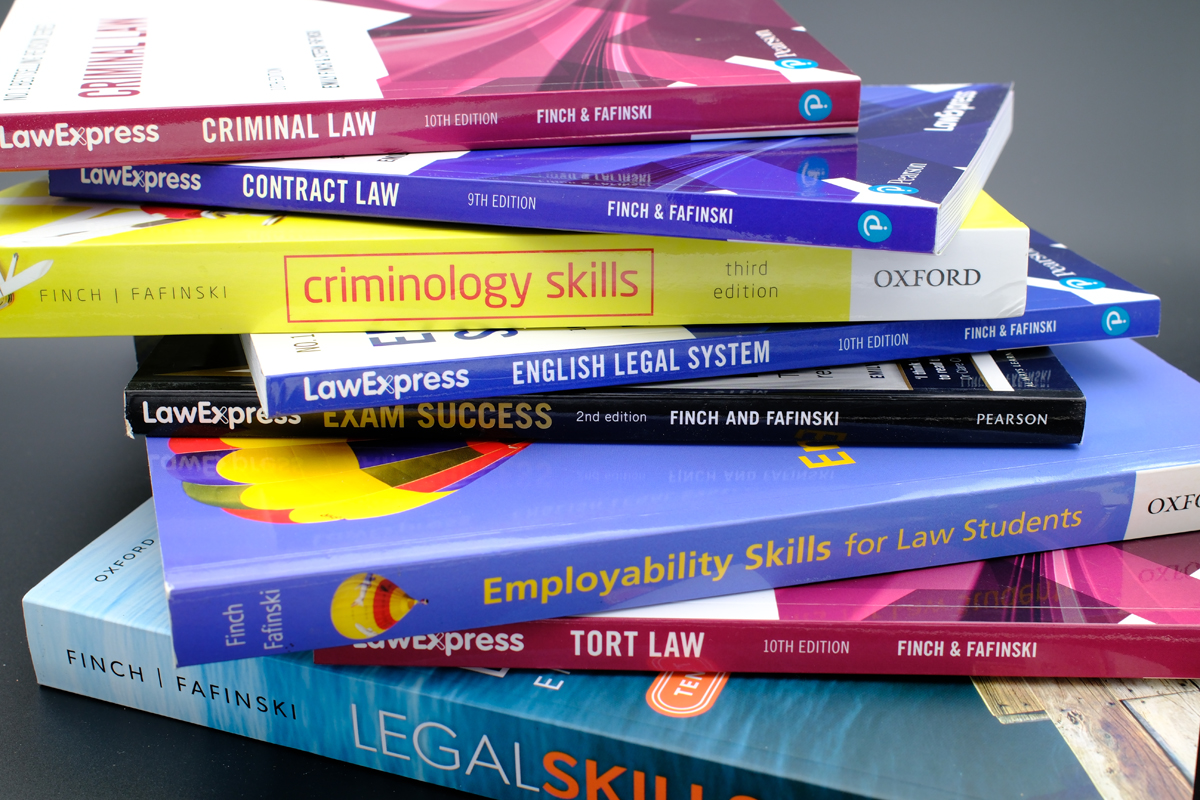
A selection of titles from the Finch and Fafinski stable.
It also reflects a recurring theme throughout my life: the belief that education is not simply the acquisition of knowledge, but a way of understanding the world and contributing to it.
The dog
On top of the book is Fraggle – according to the College of Arms, the first cockapoo in heraldry.
When designing the arms, I was initially stuck for an idea for a beast to place on the top.
So I asked whether it would be possible to have my dog included.
It was, so we got her to pose as heraldically as possible, with a piece of ham just out of shot, and sent the photograph to the College of Arms. Their incredibly talented artists did the rest.
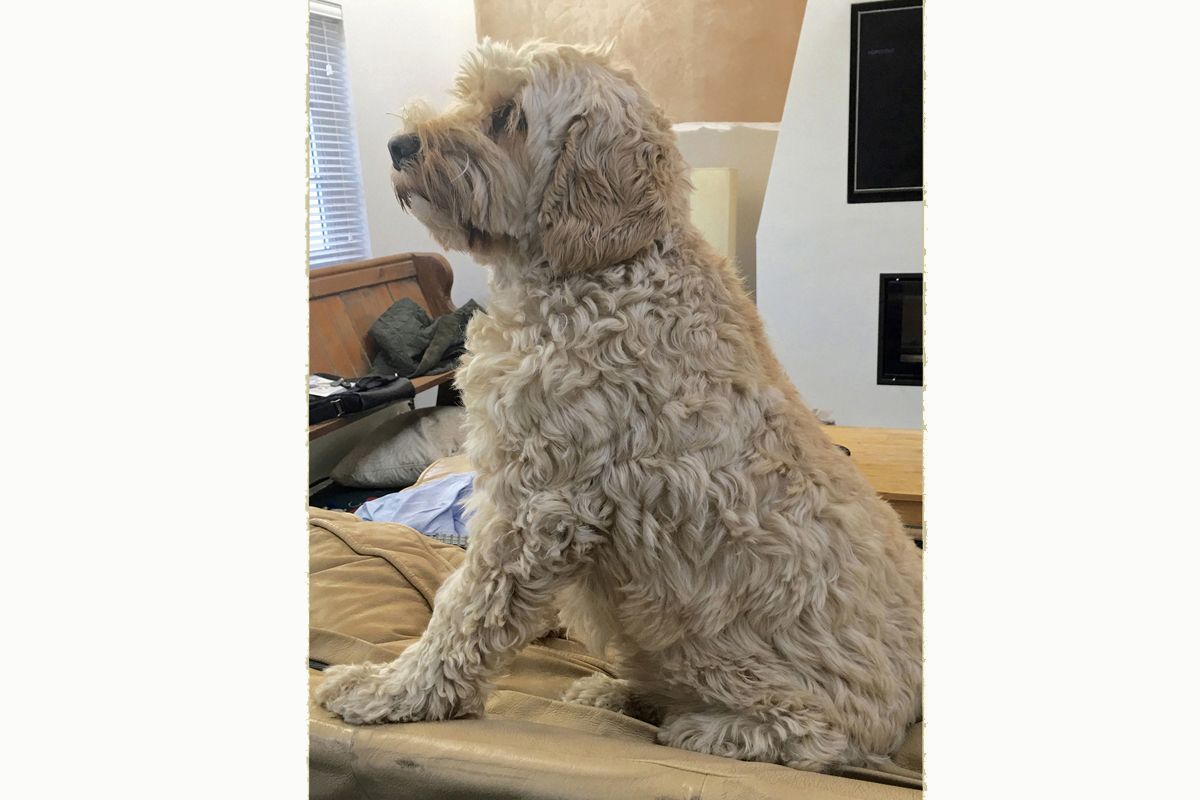
Fraggle, posing heraldically. Ham just out of shot. This is the image the College of Arms worked from.
It was important to me that the arms should not only represent achievements and institutions, but also the things that make life personal.
The key
In the arms (but not in real life: she doesn't have opposable thumbs) Fraggle is holding an identical key to that from the arms of the Worshipful Company of Information Technologists - membership of which gave me the opportunity to petition for a grant of arms in the first place.
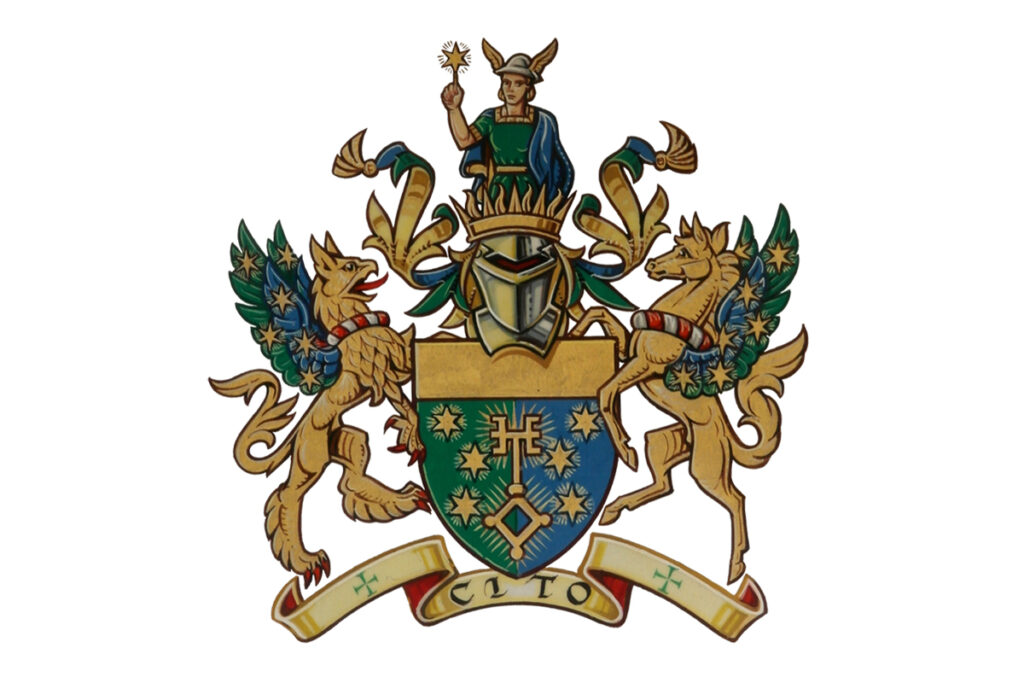
The full achievement of arms of the Worshipful Company of Information Technologists.
Although my arms were granted shortly before I started working with the Parole Board for England and Wales there is a fortuitous retrospective link between the key and making decisions which involve balancing public protection with the possibility of rehabilitation and resettlement.
It now represents opportunity, responsibility and the importance of using knowledge in the service of others.
The motto
The individual elements are different parts of my story, but they point towards the same idea: that knowledge, responsibility and service only have value when they are exercised with humanity.
The motto is Erga Omnia Beneficentia: kindness in all things.
The blazon
The blazon is the formal description of the coat of arms in heraldic language:
Gules the Hull of a Medieval Boat with a single Oar in bend sinister Or on a Chief Argent three Escallops Gules and the Crest Upon a Helm with a Wreath Argent and Gules upon a Book fesswise Argent bound Gules charged on the spine with two Suns in Splendour Or a Cockapoo sejant also Or holding with the dexter forepaw a double-warded Key palewise the wards upwards Gules mantled Gules lined Argent.
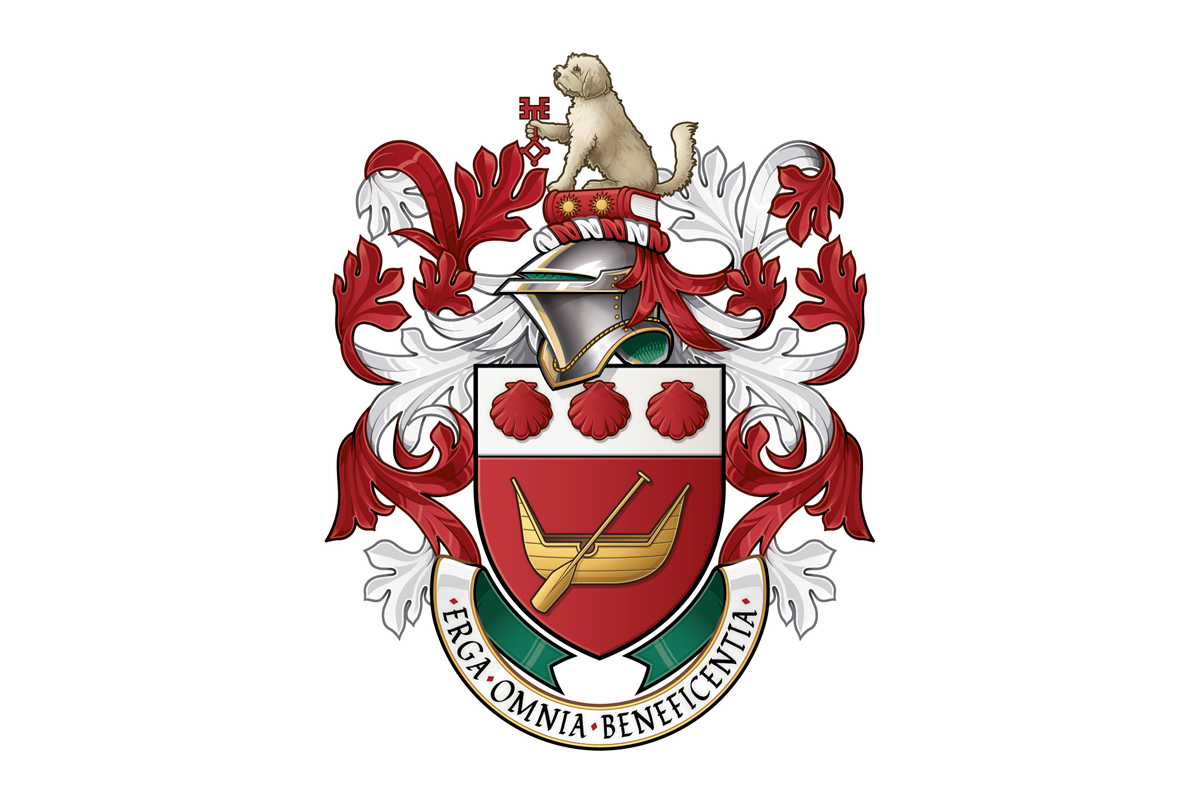
My full achievement of arms, digitally rendered by Quentin Peacock, digital heraldic artist.
Origin story
I petitioned for a grant of arms once I realised that I could, thanks in no small part to my colleague and friend Paul D Jagger. Paul is a fellow Liveryman of the WCIT and also immensely knowledgeable about heraldic matters, as well as the machinations of the City of London and its Livery Companies. I am also extremely grateful to Paul for reviewing an early draft of this page to make sure I wouldn't inadvertently upset anyone who is better versed in heraldry than me. Even if I did then end up having to rewrite the bit about colours, or tinctures or whatever they are.
The College of Arms is also satisfyingly analogue. When I asked if they could prepare a digital copy of my arms, I was told - politely but firmly - 'we don't do digital, sir. Thankfully, again via Paul, I was introduced to the very talented Quentin Peacock who very much does do digital.
If you are digging even deeper, it is worth visiting the Equality of Arms campaign which seeks to reform heraldic convention to achieve equality of the sexes, including addressing issues of entitlement, display, and inheritance.